- Home
- News
News
Discussion: Myths and Reality about Migration in Lithuania
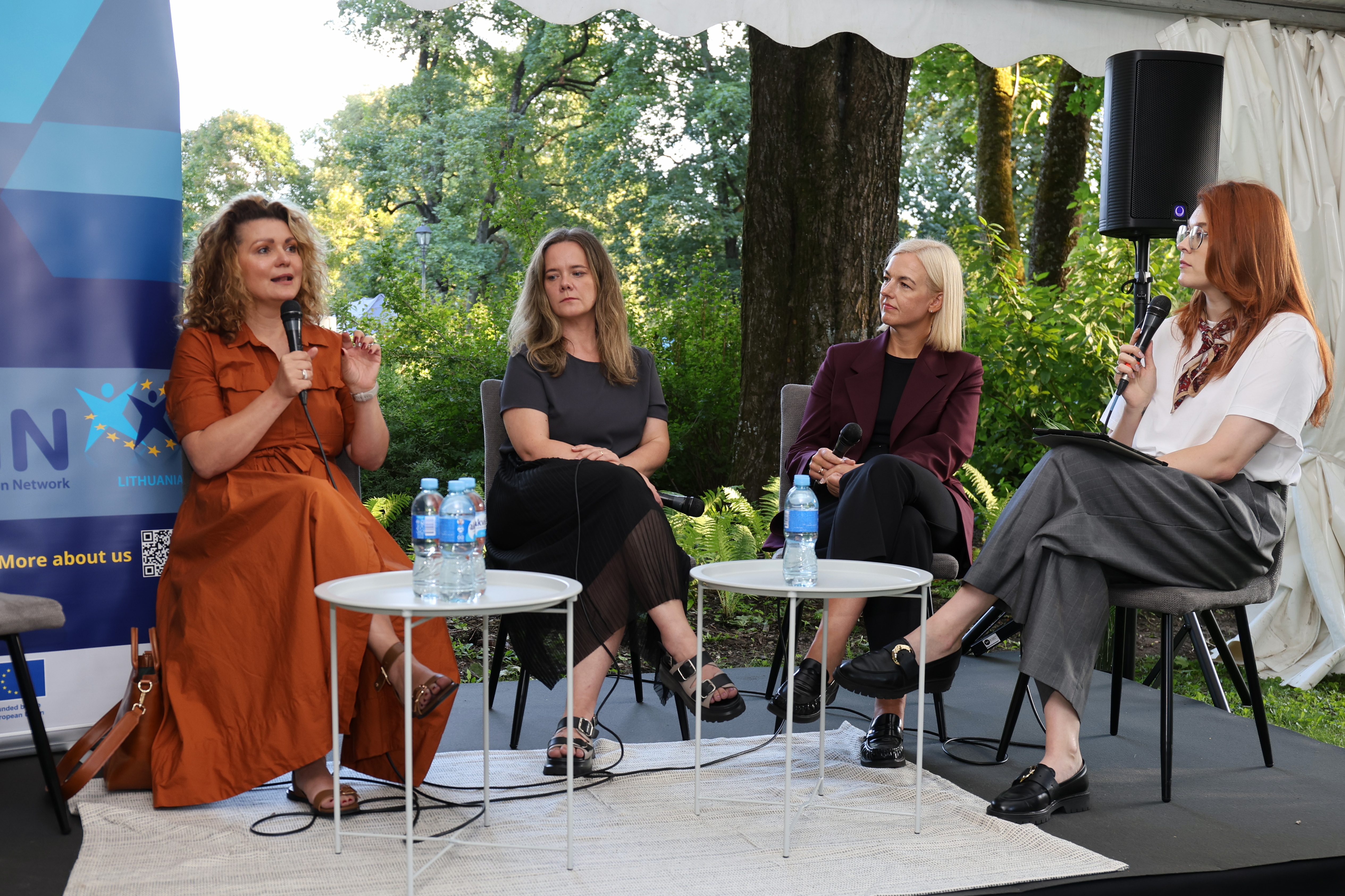
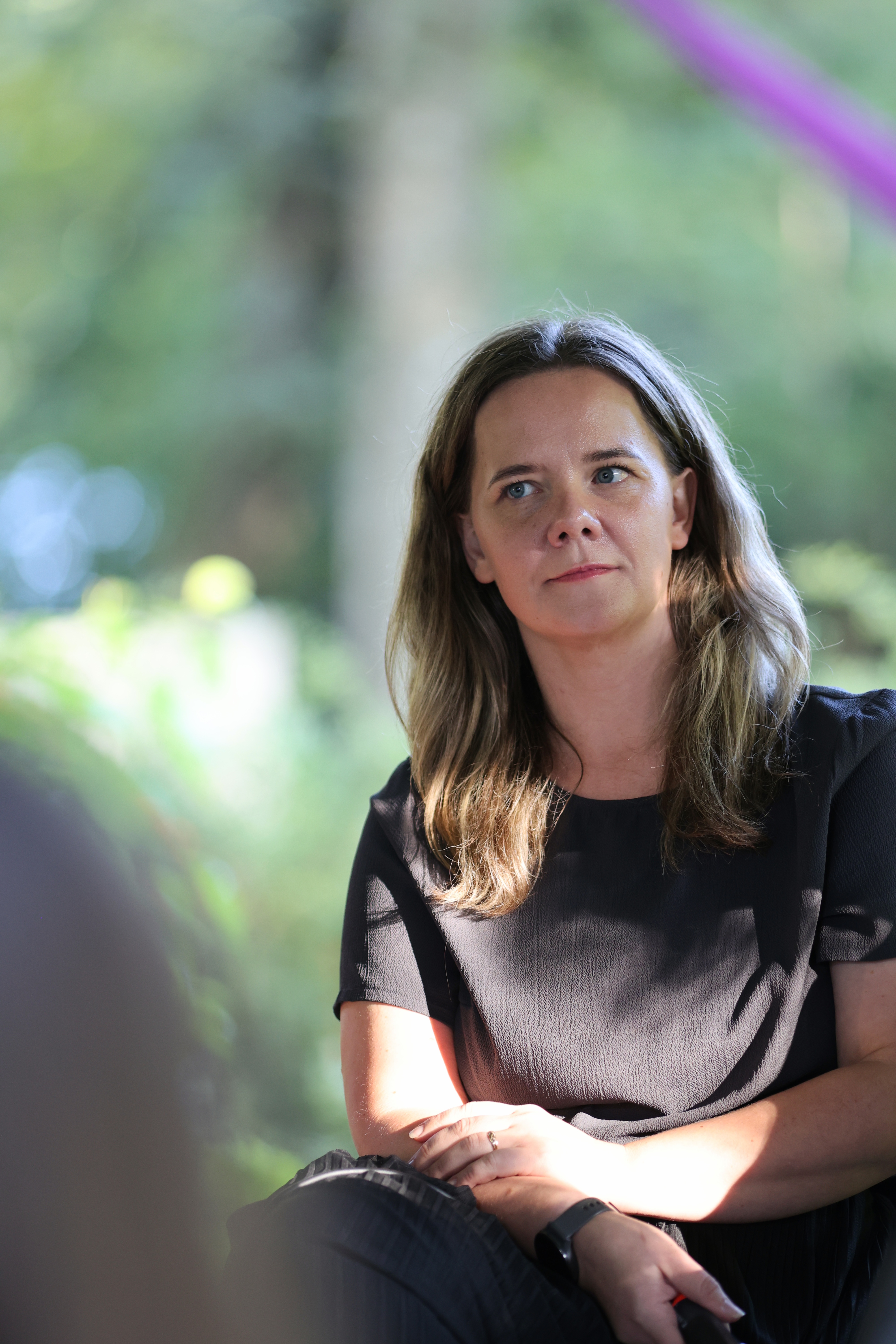
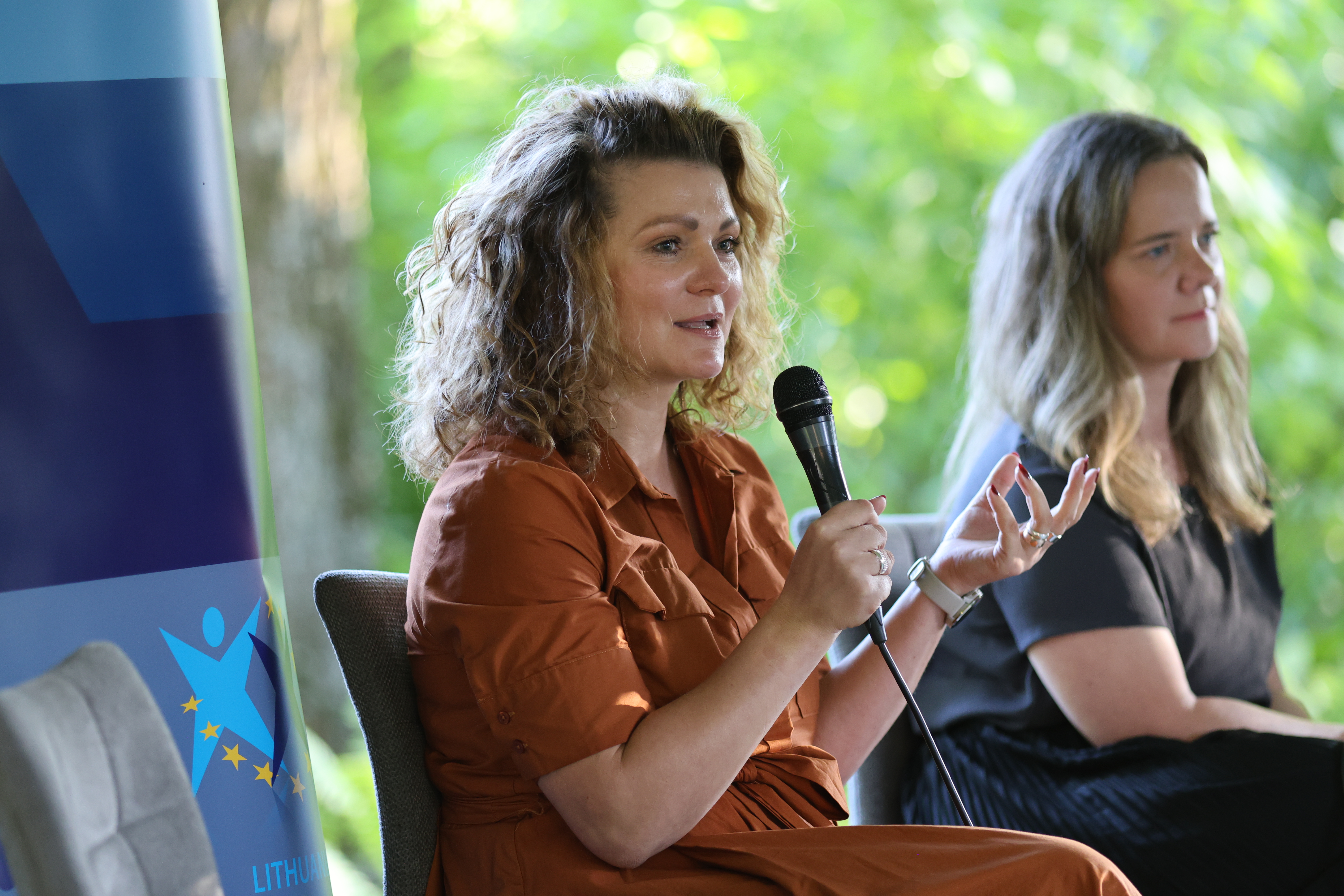
On August 28, a discussion organized by the European Migration Network (EMN) in Lithuania took place at the “Būtent!” discussion festival, focusing on myths and reality about migration in Lithuania.
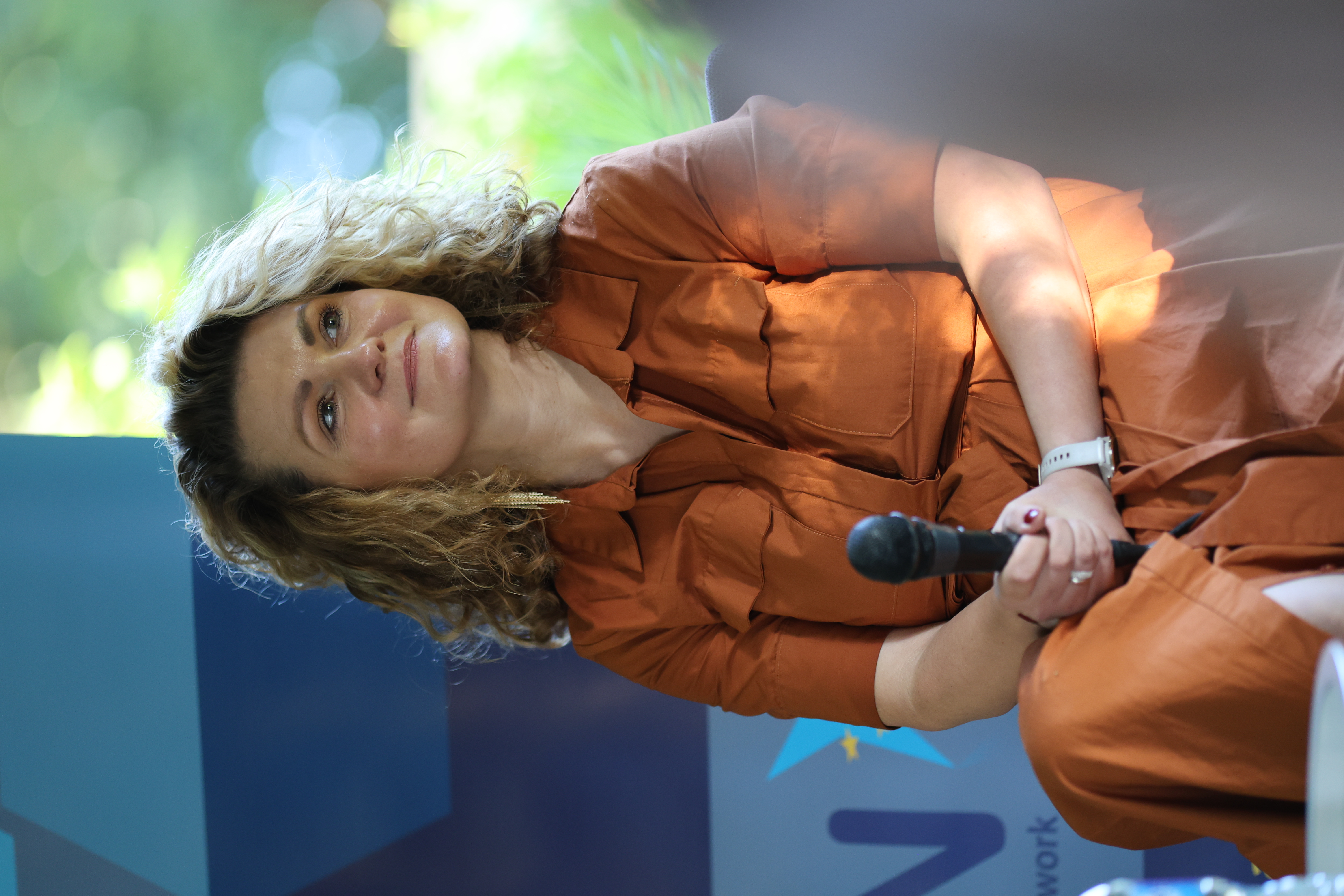
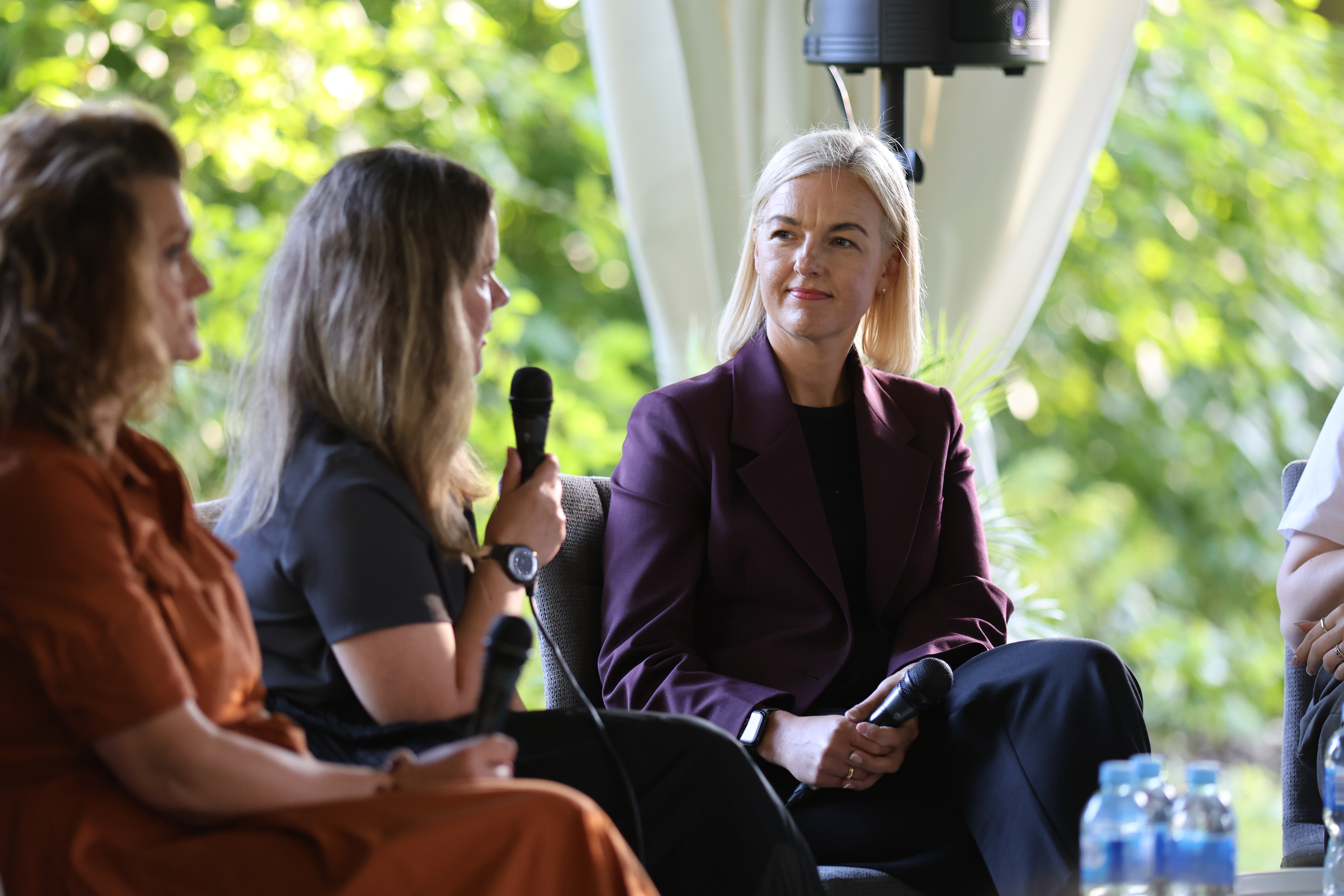
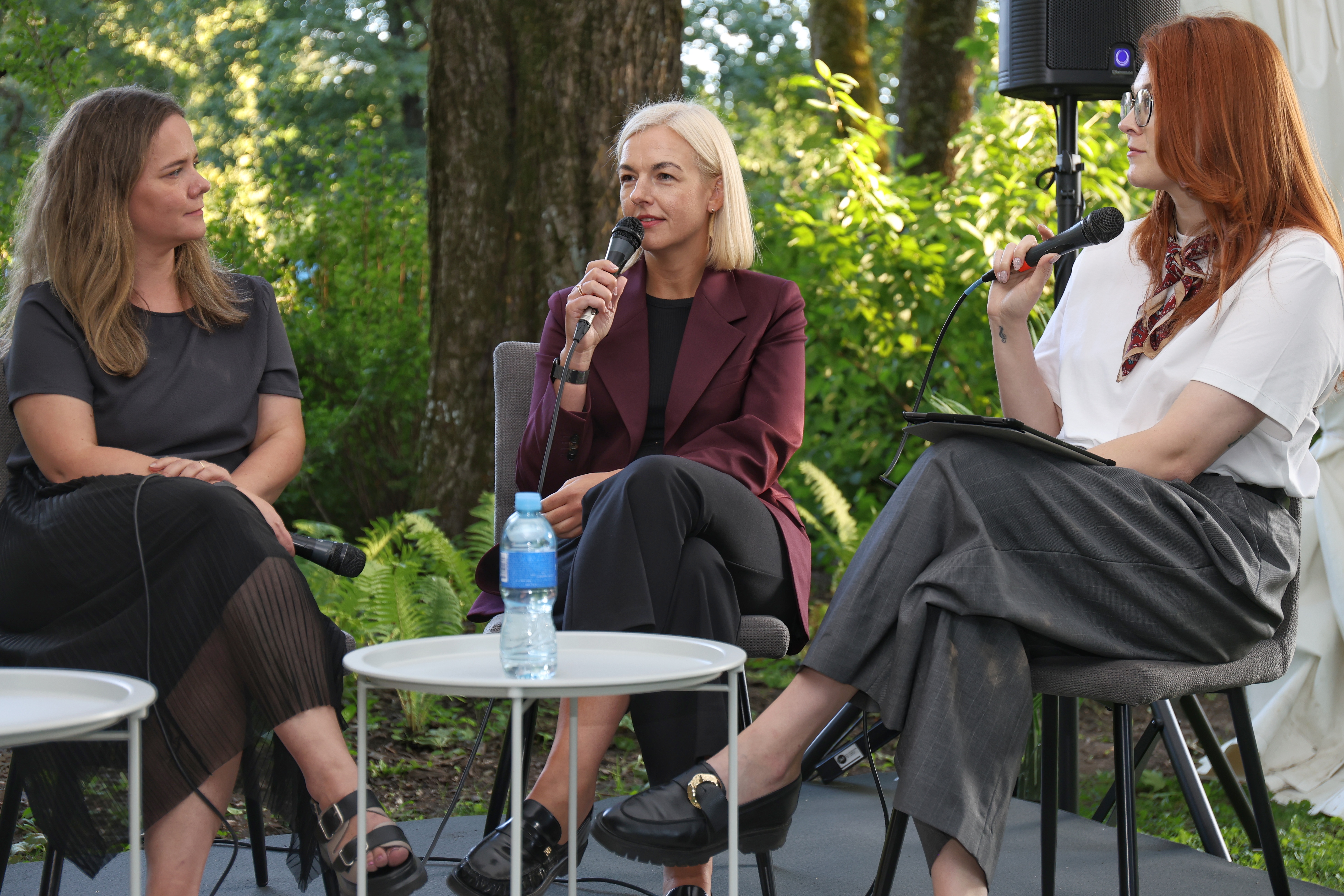
The discussion featured Aurelija Makauskienė, Head of the International Organization for Migration (IOM Lithuania); Simona Bieliūnė, Deputy Mayor of Vilnius; Vilūnė Kairienė, data strategist and consultant at the media monitoring and data analysis company "Mediaskopas"; and Masroor Ahmad Qamar, a physician and lecturer who has lived in Lithuania for over a decade.
Do migrants take jobs away from Lithuanians?
As Lithuania gradually shifts from being a long-standing country of emigration to a country of immigration, public debate increasingly raises the question of whether arriving foreigners create greater competition for Lithuanian residents in the labor market.
A. Makauskienė emphasized that both research from other countries and the situation in Lithuania show that foreigners most often fill positions where there has been a long-standing shortage of workers. Currently, around 160,000 third-country nationals work in Lithuania, half of them as long-haul truck drivers, with another large share employed in the construction sector.
"It isn't the case that arriving migrants are stealing all the jobs, because Lithuania has a fairly strong mechanism for how and when foreign workers are hired. In most cases, they are hired when there are no Lithuanian workers willing to do the job," said A. Makauskienė, Head of IOM Lithuania.
S. Bieliūnė added that in the capital, foreigners help address shortages in vital services - for example, in public transport, where there is a shortage of drivers. "From an economic standpoint, we need to keep in mind that given our demographic trends, we won't manage without people arriving to fill those jobs," said the Deputy Mayor of Vilnius. According to her, in the context of an aging society and a growing city, the foreign labor force is not competition for local workers, but a necessary condition for businesses and public services to function at all.
Migrants and crime
A study conducted in Sweden found that foreign-born individuals are more likely to become suspects in criminal activity than those born in Sweden to Swedish parents. Although public discourse often tries to draw on this and similar examples from other countries, statistical data show that there is no direct link between rising migration and crime in Lithuania. A. Makauskienė noted that between 2020 and 2026, as the number of migrants in Lithuania grew 2.5-fold, the overall crime rate in the country declined, and of roughly 4,500 people held in correctional facilities, foreigners account for only about 180.
"Being a migrant is not in itself a factor linked to crime. When you look at what actually drives people toward crime, it has more to do with lack of income and employment, and addiction. (…) What matters is that we don't directly apply what happened in another country to our own, and don't assume that because crime rose somewhere else, it will automatically rise here too," said A. Makauskienė.
V. Kairienė drew attention to the mechanisms of media and social networks: reports about crimes that mention foreigners make up only a very small share of content (around 7 percent), yet they spread far more widely and are remembered far more easily.
"The problem starts when a person has no personal connection to migrants, doesn't know any migrants, has no positive examples, and everything they see on social media is about illegal activity, fraud, or crime," said V. Kairienė.
The language barrier: motivation and opportunity
One of the most commonly heard claims in society is that migrants don't want to integrate or learn Lithuanian. The discussion participants agreed that this perception is not entirely unfounded, but its causes often lie not in a lack of willingness, but in a lack of opportunity.
Physician M. A. Qamar stressed that it all comes down to a person's own motivation: "The main thing that helped me was desire and motivation. There's nothing you can do if the person themselves doesn't want it. (…) It's a myth that no one wants to learn the language, because life itself becomes hard if you don't speak the local language."
A. Makauskienė and S. Bieliūnė identified several reasons why some newcomers don't learn the language: some plan to stay in the country only briefly, while others lack access to affordable courses. It was also noted that Lithuanians often default to speaking English or Russian when talking with foreigners.
"This is where each of us has a small part to play in better integration for foreigners - by not rushing to switch to another language. If a foreigner makes a mistake, let's encourage them to keep speaking Lithuanian," urged A. Makauskienė.
S. Bieliūnė shared that Vilnius is taking concrete initiatives - organizing 75-hour immersion courses, remote Lithuanian language classes, and language clubs.
Political rhetoric and fear-mongering
The discussion participants also addressed the claim that politicians and social media contribute to stoking fear about migration. The speakers noted that migration is a particularly potent topic, frequently used in political communication aimed at shaping public attitudes.
"Sharper messages spread more widely, and politicians seeking attention have little choice but to speak in sharper terms," commented V. Kairienė.
A. Makauskienė added that migration has become a convenient tool in political battles: "[the topic of migration] tends to run quite hot, and it's very easy to manipulate emotions around it. (…) The resulting discussion doesn't necessarily have to be grounded in data - it can instead be driven by emotion and people's preconceptions."
Do migrants live off welfare benefits?
Another frequently heard claim is that migrants come to Lithuania for social benefits. According to the discussion participants, this myth is easy to disprove, since Lithuania's legal system leaves practically no room for such a possibility.
A. Makauskienė explained that Lithuania's legal system requires a clear basis for entry (work, study, family reunification, or asylum) - a person cannot enter the country without any legal grounds and stay here indefinitely. "You can't just knock on Sodra's [the State Social Insurance Fund Board's] door and ask for a benefit - there's no basis for that. If someone works, then they accrue length of service and pay taxes," said the Head of IOM Lithuania.
S. Bieliūnė added that "our social policy is not like Germany's or Austria's. In Vilnius, the main reasons for coming here are work or study." She noted that no significant trends have been recorded in Vilnius indicating that foreigners use social assistance more often than local residents.
Integration - a two-way process
The discussion participants reached a shared conclusion: successful integration requires a clear state strategy, well-defined rules, and openness from society.
"I always see this as two-way traffic, where in the city we need to talk with residents, dispel these myths, raise awareness, and let go of preconceived fears (…). But at the same time, the people who come here [need to understand] very clearly what we expect from them," summarized Vilnius Deputy Mayor S. Bieliūnė. She added that migration and integration policy are, for now, closely linked only in theory - not at the legal or practical level - noting the lack of a clear mechanism defining what is expected of newcomers and what support the state or municipality guarantees them.
Asked what each of us could do to make it easier for newcomers to integrate, M. A. Qamar replied: "We should communicate more in Lithuanian, not scare off newcomers with complicated grammar, provide more information, and talk openly if something isn't being done right."
You can listen to the full discussion here.
The European Migration Network (EMN) is a network of EU Member States, observer countries, and the European Commission that collects, analyzes, and shares up-to-date, objective, and comparable information on migration and asylum issues. The project is funded by the EU Asylum, Migration and Integration Fund (AMIF) 2021–2027.


-2288f5556ae2502c54396f38a9cd2d4a.png)