- Home
- News
News
Migration opportunities and challenges – can Lithuania follow Ireland’s example?
From international freight drivers to workers in construction and the service sector, labour migrants have already become an integral part of Lithuania’s labour market. Increasingly, questions are being raised not only about how to attract workers, but also about how to ensure that arriving foreigners can successfully settle and integrate. These issues are made even more pressing by the requirement which came into force in 2026 that foreigners working in the service sector must have at least a basic knowledge of the Lithuanian language. In the search for solutions, attention is turning to the experience of other European countries that apply various good practices in migration and integration.
Around 217,000 foreigners live in Lithuania, almost half of them having arrived for work purposes. The majority of labour migrants are employed in medium- and lower-skilled jobs. The most popular occupation is international freight vehicle driver, accounting for nearly 67% of all labour migrants, while welders, concrete workers, plasterers, electricians and cooks are also in particularly high demand.
The large share of medium- and lower-skilled workers means that Lithuania must address not only labour shortages, but also issues of employment and integration of newcomers. In this context of labour migration, the experience of other European countries is increasingly examined. One such example is Ireland, where over the past two decades labour migration has become an integral part of the economy, and the inclusion of migrants in the labour market is based on a clear, differentiated permit system.
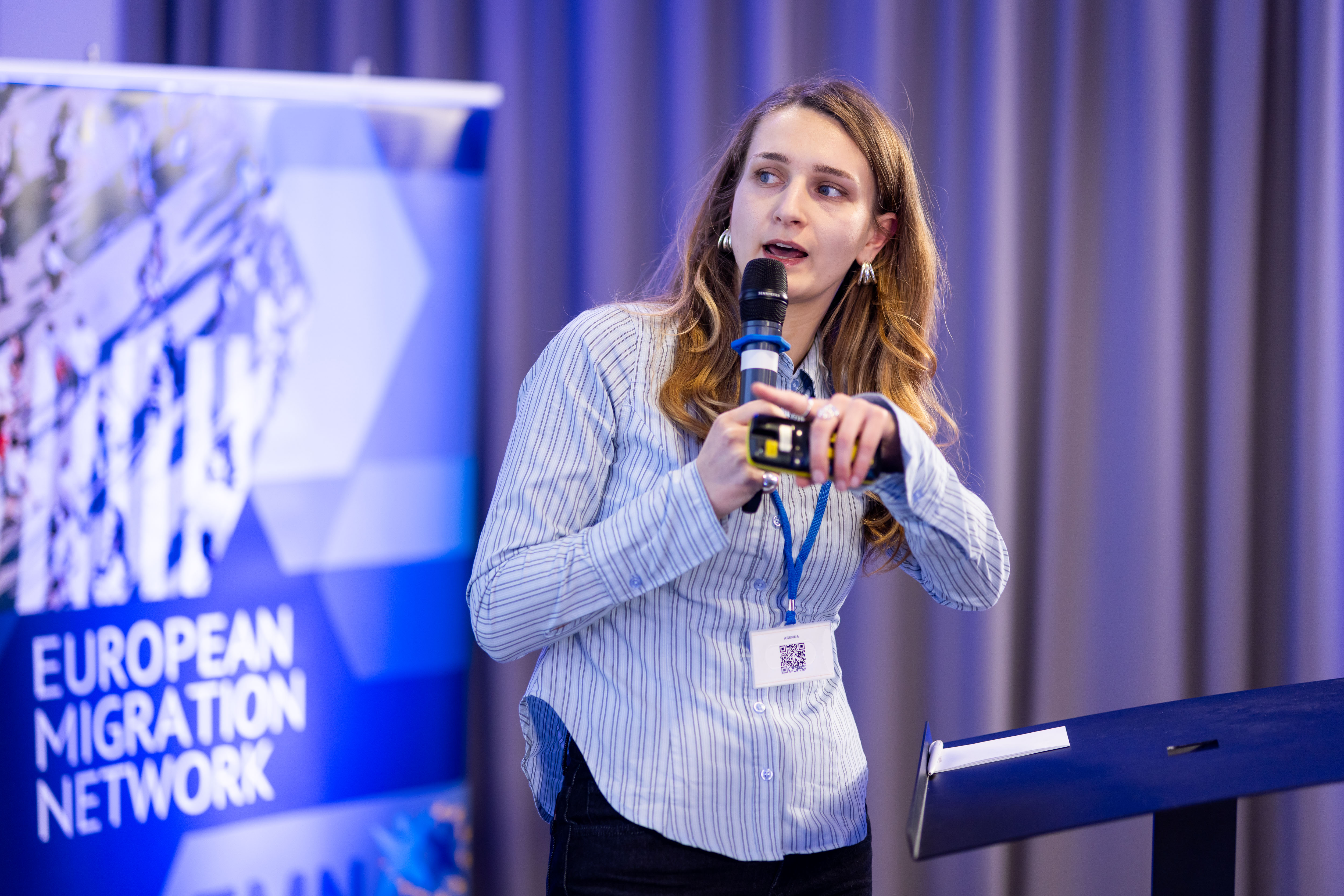
At a conference organised in Vilnius by the European Migration Network (EMN), Ada Sophia Hahn, policy officer at the Irish National Contact Point of the EMN, emphasised that Ireland is often referred to as a new immigration country, as immigration there began to take shape relatively recently.
“Unlike in many European Union countries, stable net migration to Ireland emerged only around the late 1990s. However, within a few decades migration became a structural part of the economy. Migration flows have always very clearly reflected economic cycles – increasing during periods of economic growth and declining during crises. Interestingly, the national composition and demographics of the most recent immigration flow differs significantly from the kind of immigration Ireland witnessed fifteen or twenty years ago,” said A. S. Hahn.
According to her, while in 2004–2007 Ireland mainly received EU citizens, in particularly from Eastern Europe, today more than half of new immigrants come from third countries, and employment-based permits account for about a quarter of all new immigration.
Currently, Ireland’s labour migration policy follows a clear principle of complementarity: migrants can only be recruited from abroad where the necessary skills cannot be found in the local or EU labour market. Employers recruiting from outside of the EEA need to follow clear requirements set by the State including a labour market needs test, shortage occupation lists, as well as quotas for some low- and medium-skilled roles. A company-level requirement, the so-called 50:50 rule, further dictates that employers can only recruit from abroad where at least 50 per cent of their employees are Irish or EU workers.
“Labour migration in Ireland is not intended to replace local workers. The long-term goal of national policy is to create high-skilled jobs for the resident population and promote their inclusion in the labour market first. Migration pathways are only to be used where certain competencies or skills are structurally or temporarily lacking. This way labour migration used as a targeted measure addressing specific kinds of labour shortages in the short- and medium term forming only one part of Ireland‘s overall response to unmet demand for labour,” A. S. Hahn stressed.
This approach is also reflected in Ireland’s permit system, which clearly distinguishes between permits for highly skilled, in-demand workers on the one hand and workers of a more general skill set on other. Both permit types grant differential access to rights encouraging the long-term settlement of particularly sought after shortage workers by granting them preferential access to family reunification and permanent residency.
The labour market still sets the conditions
Until 2025, Lithuania operated a system that in its logic was close to the Irish model: the state identified shortage occupations and shaped labour migration accordingly. However, this approach has changed – Lithuania abandoned shortage occupation lists and labour market tests, reorienting labour migration regulation towards an overall annual quota and stricter employer controls.
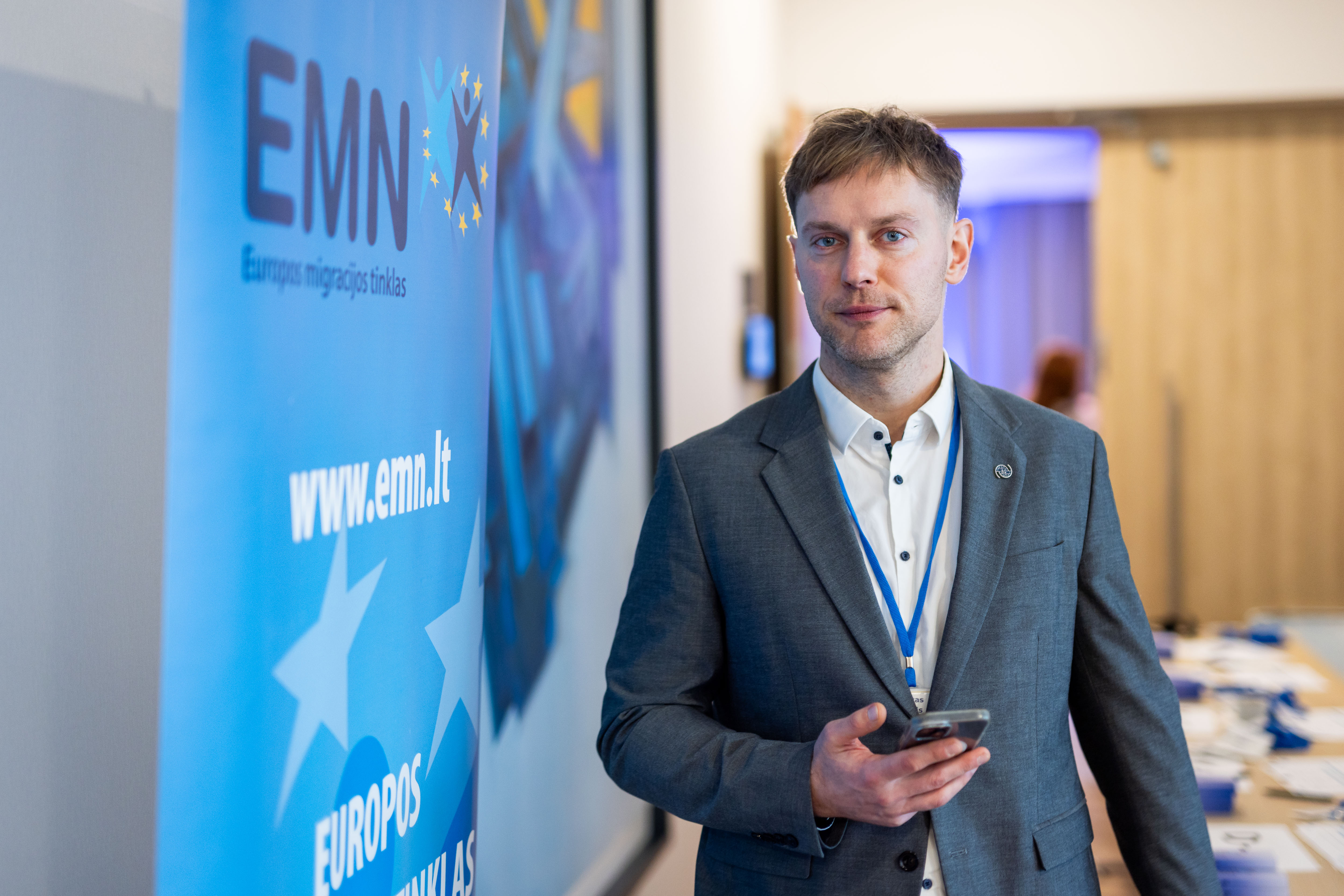
“Before the reform, the state clearly identified which workers were lacking and directed labour migration accordingly. Since 2025, the decision on which workers are needed has essentially been left to the labour market itself, while the state limits only the overall scale of migration and strengthens employer screening mechanisms,” says Vytautas Ežerskis, head of EMN Lithuania.
According to him, this system reduced administrative burden and allowed employers to respond more quickly to real needs, but at the same time reduced the state’s role in strategically shaping labour migration policy.
As in Ireland, Lithuania clearly distinguishes highly qualified workers, although through different instruments. According to V. Ežerskis, formally all labour migrants hold the same temporary residence permit, but in practice their rights differ.
“Highly qualified workers, especially holders of the EU Blue Card, enjoy a more stable position – they are not subject to quotas, can change employers more freely and can bring their families sooner. Meanwhile, medium- and lower-skilled workers remain much more dependent on uninterrupted employment relationships,” he emphasises.
Although regulatory models differ, labour market needs in Ireland and Lithuania have many similarities. In both countries, the greatest labour shortages are recorded in medium- and lower-skilled occupations – from manufacturing and construction to transport, trade and services.
In Ireland, the share of these occupations has grown in recent years, while in Lithuania it has long remained structurally dominant.
“About 73% of all job vacancies in Lithuania fall within the medium-skilled segment, while permits for highly qualified workers make up a smaller share of overall labour migration. This shows that real labour market needs often differ from stated priorities,” notes V. Ežerskis.
Lessons for Lithuania: direction and predictability
According to migration experts, the main lesson from Ireland for Lithuania lies not in copying specific instruments, but in the logic of the system itself. As A. S. Hahn notes, clearly defined permit categories and the rights attached to them provide migrants with clarity about their rights and obligations, enable them to plan for the future and encourage long-term integration.
V. Ežerskis, head of EMN Lithuania, points out that Lithuania’s system after 2025 has become more flexible, but at the same time has lost some strategic direction.
“The Irish example shows that the state can not only control flows, but also shape which skills and which workers it seeks in the long term. This link between labour migration and integration policy is still only beginning to take shape in Lithuania,” he concludes.
The EMN (European Migration Network) is a network of EMN Member States, observer countries and the European Commission, aimed at collecting, analysing and sharing up-to-date, objective and comparable information on migration and asylum. The project is financed by the EU Asylum, Migration and Integration Fund (2021–2027).


-2288f5556ae2502c54396f38a9cd2d4a.png)