- Home
- News
News
Webinar on Central Asian Migration to Europe
Today, we hosted a webinar presenting key findings from a study by the IOM Regional Office for Europe and Central Asia on Central Asian labour migration to Europe, with a particular focus on Lithuania and Poland.
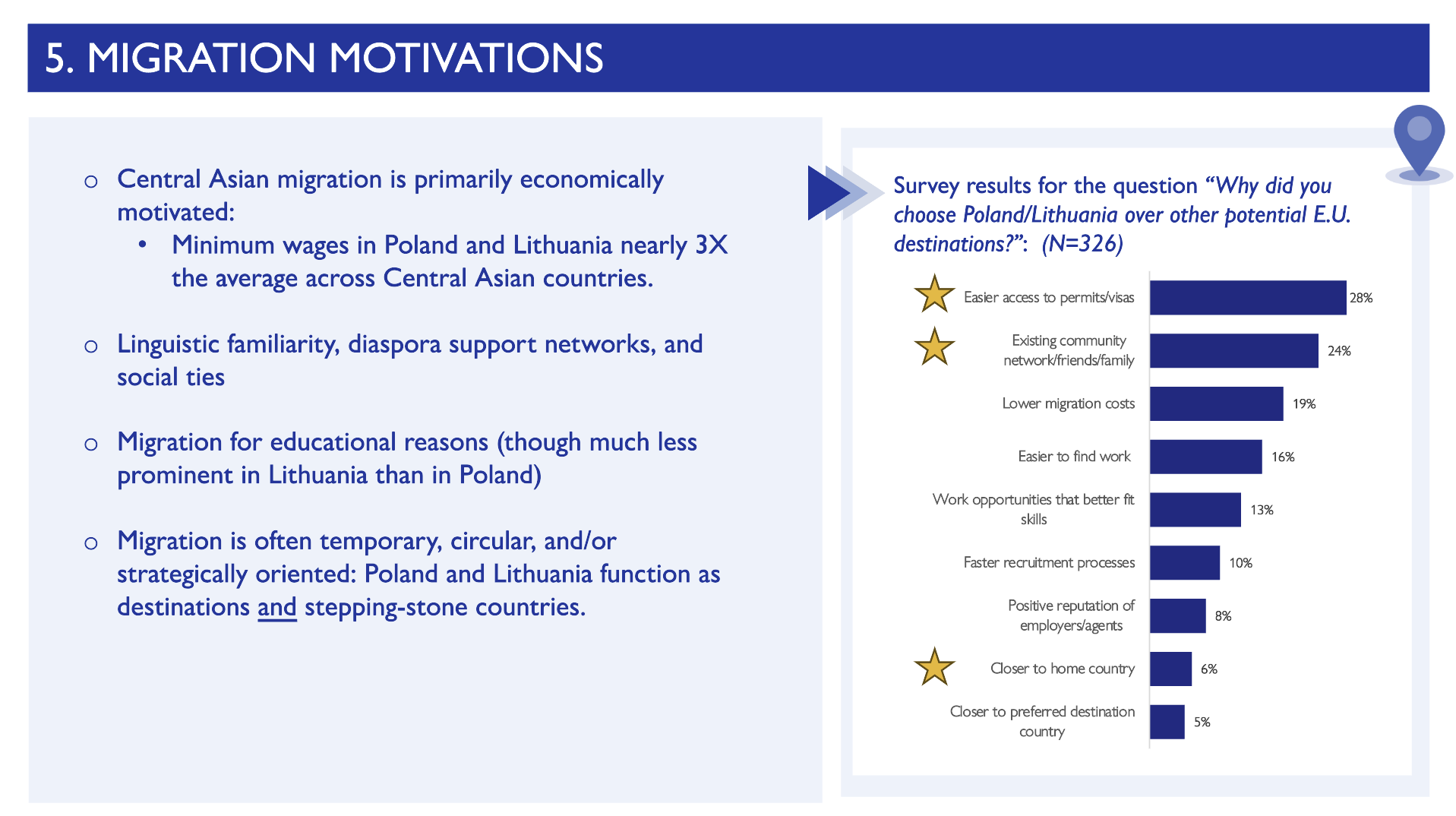
The webinar explored evolving labour migration trends, migration pathways, protection gaps, and the challenges migrants face before departure and upon arrival. As migration from Central Asia to Europe continues to grow, Lithuania and Poland are emerging as key destination countries, with most migration taking place through regular, employer-sponsored channels. Notably, the number of Central Asian nationals residing in the EU has nearly tripled between 2020 and 2024.
In his opening remarks, Jason Theede, Regional Thematic Specialist on Labour Mobility and Social Inclusion at IOM Regional Office for Europe and Central Asia, highlighted the importance of practical and structured migration pathways, circular migration, and early integration measures that improve outcomes for both migrants and receiving countries.
Harley Danielle Emery, Data and Research Consultant at the IOM Regional Office Vienna, presented the study’s main findings, emphasizing key migration drivers, the growing role of Lithuania and Poland in issuing work-based residence permits, and the persistent risks migrants face, including misinformation, unethical recruitment practices, debt, and barriers related to language and recognition of qualifications. The presentation also highlighted ongoing efforts in both countries to strengthen regular migration systems and improve worker protections through digitalized and more transparent processes.
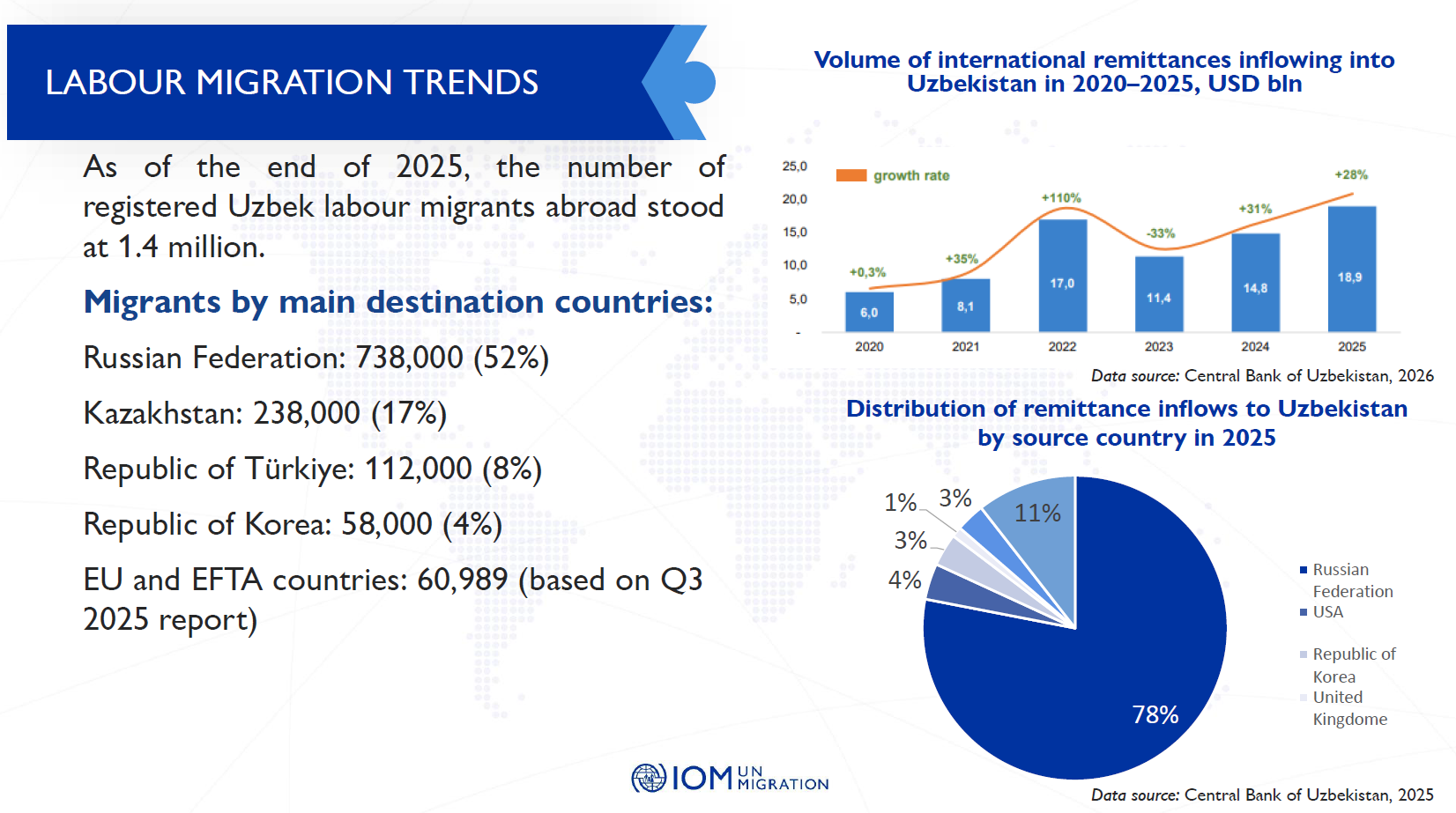
The second part of the webinar featured insights from Andrew Jeremy Gray, Head of Office at IOM Uzbekistan, who discussed Uzbekistan’s ongoing reforms in labour migration governance. The presentation focused on efforts to promote safe and regular migration through ethical recruitment, vocational and language training, skills recognition, and stronger international partnerships aligned with labour market needs in Europe.
The discussion reinforced the importance of safe, orderly, and regular labour migration that benefit both migrants and countries of origin and destination.
We thank our speakers: Jason Theede, Harley Danielle Emery, and Andrew Jeremy Gray for their valuable insights and contributions, as well as all participants for the engaging discussion and thoughtful questions.
Please find the study here.


-2288f5556ae2502c54396f38a9cd2d4a.png)